*This article was originally published on May 30, 2026, and updated by Compass Furnished Apartments in October 2026 with expanded instructions for folding and packing a business suit, preventing wrinkles, comparing garment bags and suitcases, and caring for a suit after arrival.
You arrive at your destination, open your suitcase, and immediately notice deep creases running through your suit jacket and trousers, which means you now have to spend time fixing something that could have been avoided with better packing.
This situation is common for business travelers, and it often creates unnecessary stress before an important meeting or presentation. The way you pack your suit directly affects how you show up, not only in appearance but also in confidence and readiness.
At Compass Furnished Apartments, we host professionals who travel for work, including consultants on tight deadlines, healthcare workers on rotations, and employees relocating for new roles, and one of the most consistent patterns we see is that preparation, even in small details like packing, has a measurable impact on how smooth and productive a trip feels.
This guide will walk you through how to pack a business suit for travel using simple, proven techniques that help you avoid wrinkles, stay organized, and arrive ready to work.
How to Pack a Suit Without Wrinkles: Quick Answer
- Make sure the suit is clean, dry, and free of existing wrinkles.
- Empty the jacket and trouser pockets.
- Turn one jacket shoulder inside out.
- Tuck the opposite shoulder into the inverted shoulder.
- Align the collar, lapels, and sleeves without forcing the fabric.
- Fold the trousers along their natural crease.
- Place the trousers over the jacket and fold the jacket once, if necessary.
- Pack the suit near the top of the suitcase without placing heavy items over it.
- Unpack and hang the suit immediately after arrival.
- Use a garment steamer according to the fabric-care label if minor wrinkles remain.
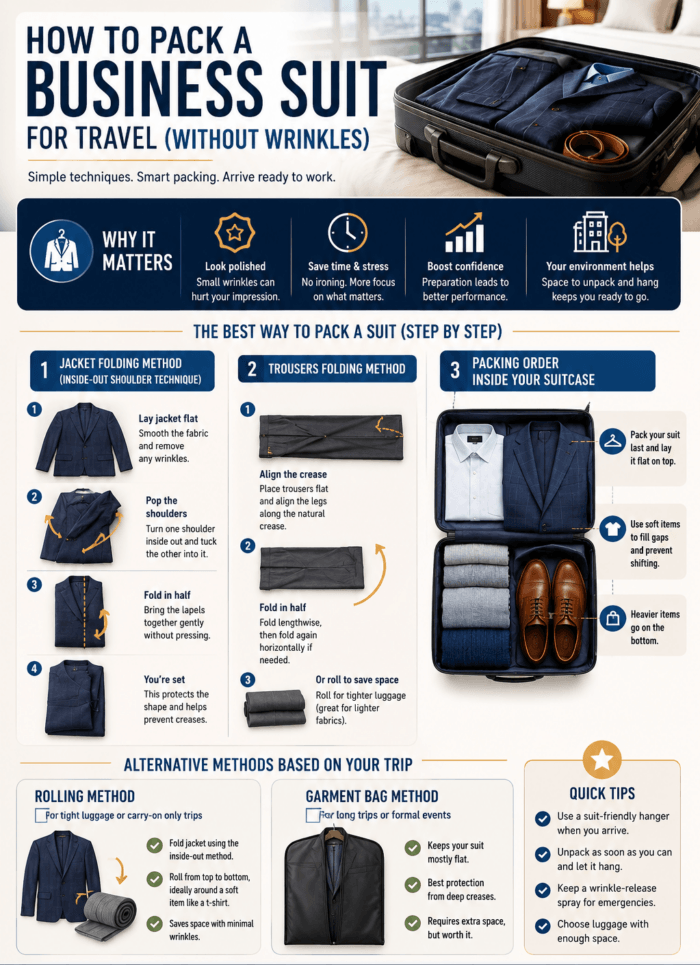
Business Suit Packing Guide: Step-by-Step Infographic
Use this visual guide to follow the recommended jacket-folding method, align the trousers correctly, and arrange the suit inside your suitcase to help minimize wrinkles during travel.
Why packing your suit the right way matters
Your suit is often one of the most important items you bring on a business trip because it directly affects how you present yourself in professional settings, and even small wrinkles can make you appear less polished and prepared.
Business travel does not leave much room for error, since schedules are often tight, days are long, and access to tools like irons or steamers is not always guaranteed when you need them. When your suit comes out of your suitcase in poor condition, you are forced to spend time fixing it instead of focusing on your work.
There is also a broader connection between preparation and performance, since when your clothing is ready to go, you remove one more friction point from your day, which helps you stay focused and confident.
Where you stay also plays a role in this process, because having enough space to unpack, hang your clothes, and reset your setup makes it easier to maintain a professional appearance throughout your trip. As we see with many Compass guests, the environment you stay in has a direct impact on how organized and prepared you feel each day.
Stay ready for every meeting with furnished apartments designed for business travel.
Before You Pack Your Business Suit
Proper preparation reduces the chance of setting existing wrinkles or creating pressure marks during the trip.
- Check the care label: Wool, linen, synthetic blends, and delicate fabrics may require different handling.
- Start with a clean, dry suit: Packing a damp garment can create deeper wrinkles and unwanted odors.
- Remove existing wrinkles: Press or steam the suit before packing, following its care instructions.
- Let the fabric cool and dry: Do not place a warm or damp jacket directly into the suitcase.
- Empty every pocket: Phones, wallets, keys, pens, and business cards can distort the fabric and create pressure marks.
- Remove accessories: Take off lapel pins, pocket squares, cuff links, and removable collar accessories.
- Unbutton the jacket: This allows the jacket to fold naturally without pulling at the buttons.
Preparing the suit and emptying its pockets before packing helps prevent pressure-related creases and distortion.
The best way to pack a Business suit Step by Step
If your goal is to pack a suit without wrinkles, you need to follow a method that protects the jacket’s structure while reducing pressure on the fabric, and the most reliable approach combines careful folding with smart placement inside your suitcase.
STEP 1: Jacket folding method (inside-out shoulder technique)
Start by laying your suit jacket flat on a clean surface, making sure the fabric is smooth and free of wrinkles before you begin folding.
Next, turn one shoulder inside out, then gently tuck the other shoulder into it so the two shoulders nest together, often referred to as the “pop shoulders” method. This technique helps protect the jacket’s outer layer and prevents sharp creases from forming across the front.
Once the shoulders are positioned correctly, fold the jacket in half vertically so the lapels align neatly, taking care not to press too hard, as excessive pressure can still create unwanted lines in the fabric.
This method is widely used because it balances structure and flexibility, making it one of the most effective ways to achieve wrinkle-free suit travel.
STEP 2: How to Fold Suit Trousers for Travel
- Empty the pockets and remove the belt.
- Fasten the zipper and closure so the waistband keeps its shape.
- Hold the trousers by the waistband and align the legs.
- Follow the trousers’ existing front and back creases.
- Lay the trousers flat and smooth the fabric with your hands.
- Fold them once at the knee if the suitcase is long enough.
- If additional folding is required, make a second loose fold without pressing down.
- Place the trousers over the folded jacket or directly beneath it.
Avoid tightly rolling traditional wool suit trousers. Rolling may work for some wrinkle-resistant or unstructured garments, but it can create unwanted creases in tailored fabrics.
STEP 3: Packing order inside your suitcase
The order in which you pack your suitcase is just as important as how you fold your suit, because improper placement can undo all of your careful work.
Start by placing heavier and bulkier items at the bottom of your suitcase, then add lighter clothing layers on top, and finally place your suit last so that it sits flat at the top of your packing arrangement.
Avoid placing shoes or heavy objects on top of your suit, and instead use soft items like shirts or sweaters to fill any empty gaps around it, which helps prevent shifting during transit and reduces pressure on the fabric.
This approach works well whether you are packing for a short domestic trip or figuring out how to pack a suit for international travel with limited luggage space.
Explore furnished apartments in MA, CT, and NY built for working professionals.
Alternative methods based on your trip
Different types of trips call for different packing strategies, so it is important to choose a method that fits your luggage, schedule, and priorities.
STEP 4: Rolling method for tight luggage
If you are traveling with only a carry-on, rolling your suit can help you save space while still keeping wrinkles to a minimum, provided you start with the proper folding technique.
After folding your jacket using the inside-out method, you can gently roll it from top to bottom, often wrapping it around a soft item like a t-shirt to provide additional cushioning.
This method is especially useful for short trips where space is limited and convenience is a priority.
STEP 5: Garment bag method
A garment bag is the most protective option for packing a suit, since it keeps the suit mostly flat and reduces the risk of deep creases forming during travel.
This method is ideal for longer trips, formal events, or situations where you need your suit to be in near-perfect condition upon arrival, though it does require extra space and can be less convenient when navigating airports.
When comparing garment bags vs suitcases, the garment bag offers better protection, while the suitcase offers more flexibility.
STEP 6: Hybrid method
Many experienced business travelers rely on a hybrid approach that combines careful folding with structured luggage, placing the folded suit at the top of a carry-on while ensuring it remains protected by surrounding soft items.
This method offers a practical balance between convenience and protection, making it a popular choice for frequent travelers.
How to prevent wrinkles before and after you pack
Even the best folding technique can benefit from a few additional steps that reduce friction and protect the fabric throughout your journey.
Before packing, place your suit inside a plastic dry cleaning bag to create a smooth surface that helps prevent wrinkles, since the plastic allows the fabric to move more freely rather than gripping against itself.
You can also place tissue paper between folds to soften pressure points, and it is important to avoid overpacking your suitcase, as tight packing increases the likelihood of creases.
Shoes should always be stored in a separate bag to prevent them from pressing against or dirtying your suit.
After you arrive, the first thing you should do is remove your suit from your suitcase and hang it properly, since leaving it folded for extended periods allows wrinkles to set more deeply.
If minor wrinkles are still present, you can hang your suit in the bathroom while taking a hot shower, letting the steam relax the fabric and smooth out creases without an iron.
Having access to a proper closet makes this process much easier, which is one reason why many business travelers prefer accommodations that allow them to unpack fully instead of working out of a suitcase.
Common mistakes that ruin your suit in transit
Many issues with wrinkled suits come from small mistakes that are easy to avoid once you are aware of them.
Overstuffing your suitcase creates constant pressure on your clothing, while folding your jacket incorrectly, especially without protecting the shoulders, can lead to sharp and visible creases.
Placing your suit underneath heavier items increases the risk of crushing the fabric, and leaving your suit packed for too long after arrival allows wrinkles to set in more permanently.
Ignoring fabric type is another common mistake, since some materials are more prone to wrinkling and require extra care when packing.
Business Suit Travel Packing Checklist
Clothing
- Suit jacket.
- Matching trousers.
- Dress shirts.
- Tie or bow tie.
- Undershirts.
- Dress socks.
- Belt or suspenders.
- Dress shoes.
- Casual clothing for non-business hours.
Accessories
- Pocket square.
- Cuff links.
- Tie clip.
- Watch.
- Collar stays.
- Extra buttons or a small sewing kit.
Suit-care items
- Wide travel hanger.
- Breathable garment bag.
- Shoe bags.
- Lint roller.
- Stain-removal pen.
- Fabric brush.
- Travel steamer, if permitted and appropriate.
- Clean tissue paper for folds.
Before leaving
- Confirm that the suit still fits comfortably.
- Check for stains, missing buttons, and loose hems.
- Review the fabric-care label.
- Check the destination’s weather.
- Confirm airline baggage rules.
- Verify whether the accommodation provides hangers, an iron, a steamer, or laundry services.
Where you stay matters more than you think
Packing your suit properly is only part of the equation, because what you do after you arrive plays an equally important role in maintaining its condition.
Many hotel rooms offer limited space to unpack, with small closets, few hangers, and layouts that make it difficult to organize your belongings, which often leads to travelers living out of their suitcase for the duration of their stay.
Serviced apartments, on the other hand, provide enough space to unpack fully, hang your clothes properly, and create a more stable routine, which helps you maintain a professional appearance throughout your trip.
This difference becomes especially noticeable during longer stays, where having the ability to reset your environment each day makes it easier to stay organized and focused. Compass Furnished Apartments offers amenities designed for extended stays, although features may vary by property. See what is included in a Compass furnished apartment or contact the team to confirm the amenities available at a specific location.
Pack Your Suit With a Plan
The best way to pack a business suit depends on the jacket’s construction, the fabric, the available luggage space, and the length of the trip. For most traditional suits, prepare the garment first, use the inside-out shoulder fold or a garment bag, avoid heavy compression, and unpack immediately after arrival.
A carry-on may be the safer option when the suit is essential for a meeting or formal event, while a garment bag may provide better protection for structured or delicate jackets. Always follow the garment’s care label and confirm airline baggage requirements before traveling.
For longer work assignments, your accommodation can also affect how easily you maintain business clothing and daily routines. Explore furnished apartments for business travel or browse available Compass locations.
About The Author

Lauren
Lauren, a passionate marketing professional from Vancouver, Canada, has an insatiable love for travel. Whether it’s camping off the grid in a secluded forest or enjoying the bustling streets of Manhattan, New York, she embraces every adventure with enthusiasm.