
Work travel looks different now.
Trips last longer, hybrid roles pull people into cities for weeks at a time, and many professionals spend part of their assignment on-site, then finish work from their accommodation after hours.
The old setup of a hotel room and a lobby business center doesn’t work once you try to run real workdays. You need a place where calls feel private, meetings run smoothly, and your laptop doesn’t live on a bedspread.
Business travel accommodations with office space support both your work and your routine. When your stay fits your workload, your travel feels smoother, and when it doesn’t, even a simple project becomes harder.
Compass Furnished Apartments has supported business travelers across Massachusetts, Connecticut, and New York for more than twenty years. We work with consultants, healthcare teams, relocating staff, and hybrid professionals who need work friendly accommodations that hold up beyond day one.
Here is how to choose the right business travel housing options when office space matters.

What business travelers need from office-ready accommodations
Start with your must-haves. Once you know what you need to work well, the right stay type becomes easier to spot.
Reliable high-speed Wi-Fi
Wi-Fi should support video calls, screen sharing, and large uploads without freezing or dropping. If you work across time zones or join daily calls, stability matters more than raw speed.
A dedicated workspace
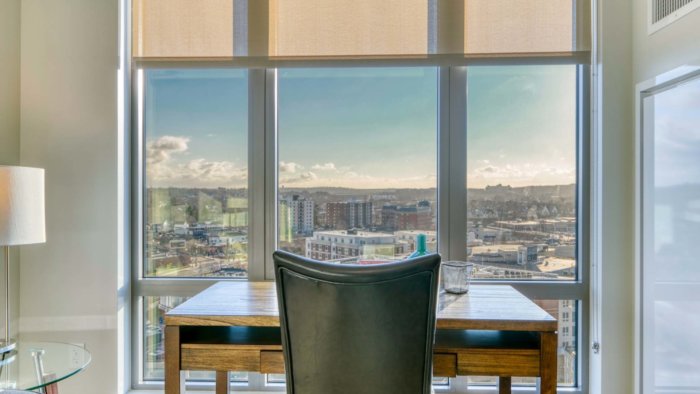
Look for a real desk, a comfortable chair, and lighting that works for long sessions. A kitchen counter and a tiny hotel table feel fine for email, but they fall apart during an eight-hour day.
Quiet for calls and meetings
Noise shapes your focus and your professionalism, so if you take client calls, run meetings, or do sensitive work, you need a space where you can speak freely and stay on track.
Separation between work and rest
When your only surface is the bed, work follows you into sleep. A layout with a clear work zone helps you shut down at the end of the day and reset for tomorrow.
Access to printing or meeting space when needed
Many trips still include documents, signing, scanning, or quick team check-ins. Even if you do most work in-unit, it helps to know you have options nearby.
Extended-stay apartments vs hotels with business centers
Many travelers start with hotels because they feel familiar, but they come with tradeoffs once the trip stretches.
Hotels
Hotels work well for quick, high-movement trips. They suit one to three nights when you spend most of the day out of the room.
What hotels do well:
- Central locations near offices and downtown hubs
- Simple check-in and daily service
- Points and loyalty programs
Where hotels fall short for real workdays:
- Shared business centers with limited privacy
- In-room desks that are small, poorly lit, or uncomfortable
- Noise from hallways and neighboring rooms
- A single-room layout that blends work, rest, and eating into one space
Hotels often feel business ready on paper, but in practice, many travelers end up taking calls from the bathroom or walking laps outside for quiet.
Serviced apartments
Serviced apartments for business travelers offer more room and more control. They suit one to four-week assignments and any trip where you need routine.
What serviced apartments do well:
- Private workspace inside your unit
- Full kitchens that support meal prep and healthier habits
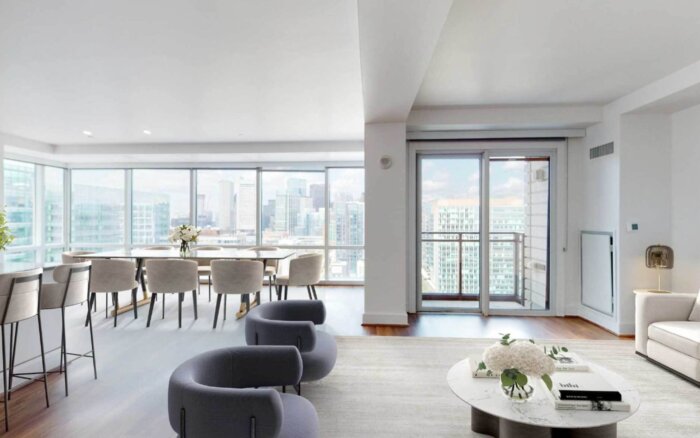
- More space to work and unwind without feeling cramped
- Better privacy for calls and early mornings
The tradeoff:
- You typically do not earn hotel brand points
- Housekeeping is often weekly rather than daily
In our experience, for travelers who work from their accommodation, the workspace and quiet matter more than points.

Corporate housing with built-in office space
Corporate housing sits in a separate category from hotels and short-stay setups. It is designed for people who need to live and work in one place for longer stretches.
Corporate housing for business travel includes fully furnished apartments built for multi-week and multi-month assignments, and this style of housing supports routine, privacy, and productivity in a way hotels rarely match.
Why corporate rentals with office space work better for longer stays
With corporate rentals, you move in once and stay put. You’re not having to pack up every few days or adjusting to a new room each week, and that stability removes friction from the trip and lets you focus on the work itself instead of the logistics around it.
The layouts also make a difference—separate areas for working, living, and sleeping create clear boundaries during the day, so you can finish work, close your laptop, and step away without turning your bed into an office. Daily routines become easier to maintain, and full kitchens, in-unit laundry, and basic storage allow you to settle into a normal rhythm. You shop once, cook simple meals, and handle everyday tasks without extra planning.
Compass provides furnished apartments for professionals across MA, CT, and NY that support full workdays, not quick check-ins between meetings. We have served corporate teams, medical travelers, and relocation guests for decades, and we design our stays around the realities of modern work travel. If you want a deeper look at corporate leases and how they work, start here.

When coworking and executive suites make sense
Some travelers need more than an in-unit workspace, while others travel with teams and want a shared place for a working session.
Coworking spaces
Coworking works well when you need:
- A professional meeting room for a few hours
- A team day with whiteboards and collaboration space
- A change of setting to stay focused
Where coworking can fall short:
- It adds daily cost
- It adds commute time
- It offers less privacy than your own unit
- It depends on availability, especially in busy districts
Executive suites
Executive suites suit client-facing work and formal meetings, and they can also help when your team needs a dedicated office for a short window.
They work well for:
- Meeting clients in a professional space
- Running interviews or onboarding sessions
- Creating a temporary project office
The limits:
- They cost more than working in your unit
- They require travel time
- They often require planning and booking windows
Many travelers choose a home base with a strong in-unit workspace and use coworking or executive suites only when needed.
If you want to understand what an executive suite is and when it fits, read our article here.
How to choose the right setup for your trip length
Trip length shapes what type of accommodation you need, because the same setup will not fit every assignment.
- One to three nights: A hotel can work if it has a real in-room desk, strong Wi-Fi, and a quiet room. Avoid relying on a shared business center.
- One to four weeks: Choose serviced apartments for business travelers with a dedicated workspace and enough room to keep your routine steady.
- One month or longer: Choose corporate housing with built-in office space. Add coworking access only if your work demands meeting rooms or team days.
This is why extended stay business apartments often feel like the best middle ground, because they give you the space and structure to work well, without the strain of hotel living.
Comfort deal-breakers to check before you book
Travelers often discover issues after arrival, but these checks can help you prevent any problems:
Wi-Fi details
Reliable internet shapes your entire workday. Ask how the Wi-Fi performs during video calls, large uploads, and peak hours, and check where the router sits in relation to the desk so the signal stays strong where you actually work.
Desk setup
A proper desk and chair support long workdays and reduce strain, so you should confirm the desk size, chair comfort, and lighting, especially if you plan to work full days from the space.
Noise and building turnover
Noise levels affect both focus and sleep, so ask what the building is like during the workweek, since properties with frequent short stays often feel busier than buildings geared toward longer-term residents.
Laundry access
Laundry access shapes how manageable a long stay feels. In-unit machines save time, reduce stress, and help you maintain a regular routine without extra trips or planning.

Hidden fees
Small fees add up over time, so be sure to ask about cleaning charges, parking costs, and local taxes before booking so there are no surprises during reimbursement or budgeting.
Late arrival process
Late arrivals should feel straightforward. Confirm how after-hours check-in works so delays or late flights do not turn into added stress at the end of a long travel day.
Why business travelers choose Compass Furnished Apartments
Business travelers choose Compass because we build stays around real workdays.
Private, quiet workspaces
Our rental units include designated areas for work so calls and meetings can happen without background noise or interruptions from shared spaces.
Reliable Wi-Fi tested for video calls
Internet setups are designed to support daily work needs like video meetings, file sharing, and cloud-based tools without frequent drops or slowdowns.
Space separation between work and rest
Separate rooms or defined zones help keep your work from spilling into rest time, which matters on longer stays where routine and balance affect focus.
Locations that support the day
Compass properties are located near hospitals, office districts, and transit routes across Massachusetts, Connecticut, and New York, which reduces your commute time and daily friction.
Support for changing plans
We know that work travel schedules often shift. Housing arrangements can be adjusted when start dates move, projects extend, or assignments change mid-stay.
If you want to explore corporate housing options, start here.

FAQs about Business Travel Accommodations with Office Spaces
Is corporate housing good for business travel?
Yes, corporate housing is great for business travel as it offers more space, privacy, and routine than hotels, which makes it a strong fit for longer assignments. These stays are designed for daily living, with separate areas for work, rest, and meals, so over several weeks or months, this setup helps travelers maintain focus and avoid the fatigue that comes with hotel living.
Are serviced apartments good for business travelers who work remotely?
Yes, serviced apartments often include desks, full kitchens, and quieter environments than hotels, which supports remote work and longer stays. They give travelers room to spread out and work comfortably during the day, then step away from work in the evening. This balance matters when workdays happen inside the accommodation.
When should I choose a hotel instead of a furnished apartment for work travel?
Choose a hotel for one to three nights when you do not plan to work long hours from your room. Hotels work well for fast trips built around meetings, conferences, or site visits, and if your schedule keeps you out most of the day, the limitations of a hotel room matter less.
Do I need coworking space if I book a furnished apartment?

Work travel goes better when your stay supports your work. Office-ready housing gives you privacy, quiet, and the space to keep your routine steady.
If you want business travel accommodations with office space that holds up for real workdays, Compass can help you choose the right fit across Massachusetts, Connecticut, and New York.
Explore furnished apartments built for work or talk to our team about business-ready housing.
About The Author

Lauren
Lauren, a passionate marketing professional from Vancouver, Canada, has an insatiable love for travel. Whether it’s camping off the grid in a secluded forest or enjoying the bustling streets of Manhattan, New York, she embraces every adventure with enthusiasm.