
Business travel costs tend to creep up slowly, then all at once.
A few nights in a hotel feels reasonable, especially when everything is close and convenient.
But after a few weeks, the same setup starts to feel limiting, and by the time a trip stretches into a month or more, many travelers realize they are paying a premium for a lifestyle that no longer fits how they are actually living and working.
This is often the point where corporate housing enters the conversation.
For longer work trips, corporate housing typically costs less than staying in a hotel, and not because it cuts corners, but because it is designed around extended stays and real day-to-day needs.
At Compass Furnished Apartments, we help business travelers, consultants, medical teams, and relocating professionals find fully furnished apartments across Massachusetts, Connecticut, and New York.
Many of our guests come to us after realizing that hotel living stops making sense once a trip moves beyond a short visit.
Here is how corporate housing lowers costs over time, and when it becomes the more practical option for extended work travel.
Why longer work trips change the cost equation
Hotels are built around short stays: you pay a nightly rate, use shared amenities, and move on. That model works well when your trip is measured in days, but it becomes less efficient when you are living somewhere for weeks or months.
On longer assignments, your daily needs do not disappear. You still need meals that fit your schedule, clean clothes, and a place where you can work comfortably and rest properly. Hotels often charge extra for these basics or push travelers toward expensive alternatives, which quietly drives up the total cost of the stay.
Corporate housing approaches the same needs differently by bundling them into one predictable monthly price. Over time, that difference adds up in ways that are easy to overlook when comparing nightly rates alone.
What corporate housing includes by default
Corporate housing is designed for professionals who need a functional place to live during a temporary assignment, not just a room to sleep in between meetings.
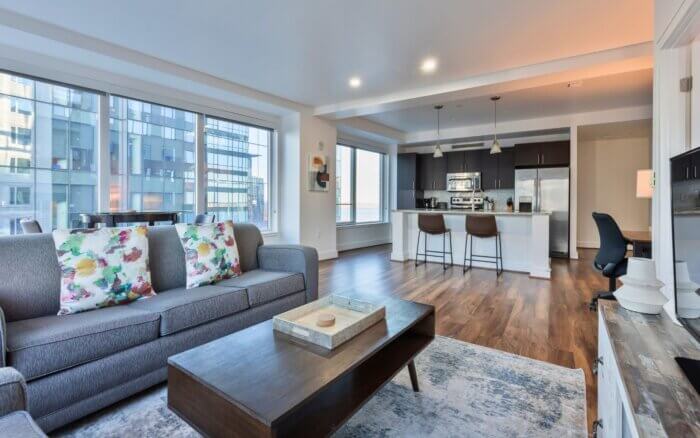
Most corporate housing includes a fully furnished apartment with a separate living area, a full kitchen with cookware, in-unit or on-site laundry, utilities, and reliable high-speed Wi-Fi.
These essentials are part of the standard setup, not optional upgrades, which reduces the number of extra decisions and expenses travelers face once they arrive.
Because the space is designed for longer stays, it supports daily routines in a way that hotel rooms rarely do, especially when workdays continue after hours.
Lower base rates for extended stays
One of the biggest reasons corporate housing costs less over time is its pricing structure. Hotels charge by the night, and even discounted corporate rates can add up quickly when multiplied across 30, 60, or 90 nights.
Corporate housing is typically priced weekly or monthly, which lowers the average nightly cost as the stay gets longer.
For example, a hotel priced between $140 and $200 per night can total $4,200 to $6,000 over a 30-day period, before taxes and additional fees are applied.
A furnished corporate apartment for the same time frame often falls between $2,500 and $4,500, with utilities already included.
The longer the stay, the more noticeable the difference becomes, which is why corporate housing tends to deliver the strongest value for assignments lasting a month or more.
Built-in amenities that reduce everyday spending
Beyond rent, daily living expenses account for a major share of overall travel costs, and this is where corporate housing often delivers its most practical savings.
Having a full kitchen changes how travelers eat during a long stay. Instead of relying on restaurant meals, room service, or hotel breakfast add-ons, guests can grocery shop and cook on their own schedule.
Even preparing a few meals at home each week can significantly reduce food spending over the course of a month.
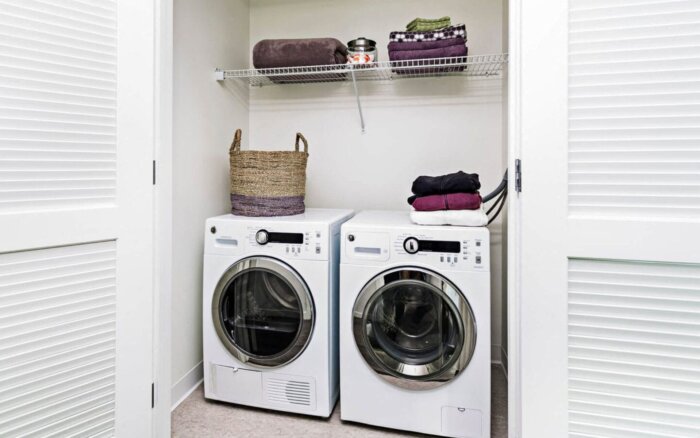
Laundry is another area where costs add up quickly in hotels, where services are typically priced per item or per load. In-unit laundry eliminates the expense and time commitment of off-site options, which matters when workdays are long.
Workspace also plays a role. Working from a bed or shared lobby space often leads travelers to rent coworking desks or struggle with productivity. Corporate housing provides space to work comfortably without additional fees, which supports longer, more sustainable routines.

Fewer hidden fees and surprise charges
Hotel pricing often looks straightforward at first, but additional charges can quickly inflate the final bill. Parking fees, resort fees, upgraded Wi-Fi, service charges, and local taxes are commonly added on after the nightly rate is set.
Corporate housing pricing is generally more transparent.
Utilities, internet, and furnishings are built into the rate, and parking costs are usually disclosed upfront. This all-inclusive structure makes budgeting easier and reduces the chance of unexpected expenses appearing at the end of the stay.
Tax advantages for longer stays
Another factor that influences cost is how longer stays are taxed.
In many cities and states, accommodations that exceed a certain length, often around 30 days, are exempt from transient occupancy or hotel taxes.
Hotels may continue charging these taxes depending on how the booking is structured, while corporate housing providers are set up to handle longer leases correctly.
Eliminating hotel taxes alone can save travelers hundreds of dollars per month, particularly in higher-cost markets like Boston or suburban New York.
A realistic 30-day cost comparison
When you compare costs side by side, the differences become clearer.
A 30-day hotel stay often totals between $4,200 and $6,000 before taxes, with additional spending on meals, laundry, parking, and fees layered on throughout the month.
A 30-day corporate housing stay typically ranges from $2,500 to $4,500, with utilities, Wi-Fi, laundry, and a kitchen already included.
While individual rates vary by location and season, corporate housing often delivers more value per dollar because fewer costs sit outside the base price.
Productivity and comfort as long-term cost factors
Not all savings show up as line items. Living in a space that supports rest, routine, and focus affects how people perform over longer assignments.
Travelers who can cook, sleep well, and separate work from downtime often experience less burnout and fewer disruptions to their schedule.
For companies, this can mean steadier output and fewer interruptions.
For individuals, it means a more manageable day-to-day experience that makes extended travel easier to sustain.
When corporate housing makes the most sense
Corporate housing is not the best choice for every trip, but it tends to offer the greatest value in specific situations.
It works especially well when a stay lasts 30 days or longer, when remote or hybrid work is part of the schedule, when predictable monthly costs matter, or when travelers want more space and privacy than a hotel can offer.
Hotels remain a good option for very short trips or quick training stays, but once a work trip starts to resemble temporary living, corporate housing often becomes the more practical and cost-effective choice.
How Compass Furnished Apartments helps manage long-stay costs
At Compass Furnished Apartments, we focus on providing housing that aligns with how professionals actually live and work during longer assignments.
Our fully furnished apartments across Massachusetts, Connecticut, and New York are located near business centers, hospitals, and transit, with pricing that includes utilities, Wi-Fi, and furnishings.
Our team works directly with travelers and companies to match length of stay, location, and budget, helping guests avoid paying for features they do not need while still enjoying a comfortable, reliable home base.
Choosing housing for a long work trip is about understanding total cost, daily comfort, and long-term practicality.
For many professionals, corporate housing offers a balance of affordability and livability that hotels struggle to match once a trip extends beyond a few weeks.
If you’re planning an extended work stay in Massachusetts, Connecticut, or New York, our team can help you explore furnished apartment options that support both your schedule and your budget.
About The Author

Lauren
Lauren, a passionate marketing professional from Vancouver, Canada, has an insatiable love for travel. Whether it’s camping off the grid in a secluded forest or enjoying the bustling streets of Manhattan, New York, she embraces every adventure with enthusiasm.